


Ethereum Liquidity Dominance Supports ETH Structure
Ethereum maintains over 52% of DeFi liquidity while ETH stabilizes above critical support during renewed institutional accumulation.
- Ethereum controls over 52% of DeFi liquidity despite rising competition from alternative blockchain ecosystems.
- ETH defended the $2,105 support region as buyers gradually regained short-term market control.
- Stablecoin infrastructure and institutional deployment continue supporting Ethereum’s broader ecosystem dominance.
Ethereum Liquidity remains central across decentralized finance markets as institutional capital continues concentrating inside Ethereum infrastructure despite growing competition and recent volatility affecting broader digital asset markets.
Ethereum Continues Leading DeFi Liquidity Markets
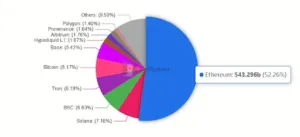
Crypto commentator Lucky recently stated Ethereum remains the center of decentralized finance infrastructure globally. His comments followed updated DeFiLlama data showing Ethereum controlling roughly 52.3% of total value locked.
Source: X
The chart shows Ethereum securing approximately $43.3 billion across decentralized finance applications and protocols. Competing ecosystems remain considerably smaller despite periods of stronger speculative momentum during previous market cycles.
Solana currently controls slightly above 7% of decentralized finance liquidity across crypto markets today. BSC, Tron, and Bitcoin each maintain market shares hovering near the 6% range respectively.
Base follows with approximately 5.4% market share while other ecosystems remain fragmented underneath Ethereum. Arbitrum, Polygon, Provenance, and Hyperliquid collectively account for significantly smaller liquidity concentrations overall.
Institutional Capital Still Prefers Ethereum Infrastructure
Lucky argued institutional participants continue favoring Ethereum because of infrastructure maturity and operational reliability. Large financial participants usually prioritize liquidity depth, security history, and ecosystem resilience before allocating capital.
Stablecoin concentration remains another major structural advantage supporting Ethereum’s decentralized finance leadership across markets. Ethereum still functions as the primary settlement layer for several dollar-backed stablecoin ecosystems globally.
Liquidity concentration creates compounding network effects across decentralized financial infrastructure and application development ecosystems. Developers usually build where users already exist, while users follow accessible liquidity and integration.
That cycle strengthens Ethereum’s position because migration costs rise alongside ecosystem interconnectedness over time. Lending protocols, derivatives infrastructure, tokenized assets, and stablecoin liquidity remain deeply integrated throughout Ethereum.
ETH Stabilizes Above Key Technical Support Levels
Ethereum as of writing trades at $2,136 during the latest session while broader crypto participation softened modestly overall. The intraday structure reflected gradual accumulation behavior as buyers defended critical support throughout trading activity.
ETH initially weakened below the $2,120 region before buyers regained control during later trading sessions. That recovery shifted short-term market structure from defensive positioning into controlled stabilization across intraday activity.
The strongest reaction emerged around the $2,105-$2,110 support zone during overnight market activity yesterday. Buyers repeatedly defended that area before Ethereum reclaimed the $2,120 region with improving directional momentum.
Volume declined more than 23% despite the moderate upward recovery across Ethereum trading activity recently. Lower participation sometimes reflects cautious accumulation instead of aggressive breakout expansion during consolidation phases.