

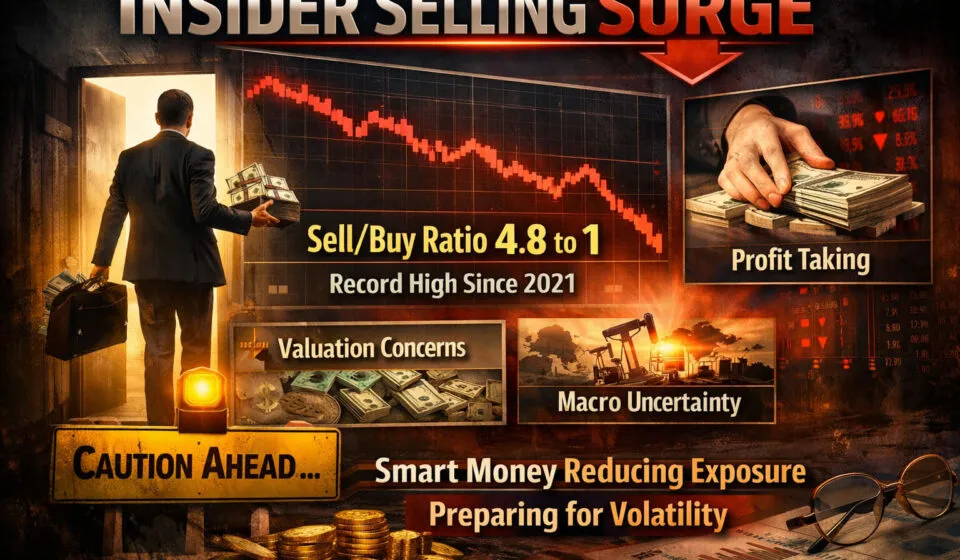
Insider Selling Surge Signals Market Caution
Insider selling surge intensifies as 152 sell orders and zero buys raise caution ahead of U.S. market open conditions.
- Insider selling surge shows 152 sell transactions with zero buys, reflecting strong imbalance ahead of market open.
- Coordinated selling across firms signals urgency, often seen before periods of elevated volatility in markets.
- Lack of buy-side activity suggests reduced confidence, increasing pressure on short-term market sentiment.
Insider selling surge is drawing attention as transaction data shows heavy liquidation activity ahead of the U.S. market open, with selling pressure dominating flows and raising concerns about near-term market direction.
Transaction Imbalance Reflects Strong Selling Pressure
Insider selling surge is evident through a sharp imbalance between sell and buy transactions. Data shows 152 sell orders recorded with no corresponding buy activity. This one-sided flow indicates capital exiting positions at a rapid pace.
The dataset reflects concentrated selling across multiple insiders within a short period. Such clustering suggests urgency rather than routine portfolio adjustments. Timing ahead of the market open adds further relevance to this pattern.
A recent market statement described aggressive insider selling across various assets. The message noted that billions were being offloaded without any recorded buys. This aligns directly with the imbalance observed in the transaction data.
The absence of buying interest is notable within typical insider activity trends. Under normal conditions, mixed transactions provide balance across strategies. The current structure instead reflects a unified direction toward liquidation.
Coordinated Selling Points to Broader Market Signals
Insider selling surge appears consistent across different firms and executive roles. The transaction table shows repeated sell entries without variation in action. This consistency suggests a broader macro-driven decision rather than isolated cases.
When multiple insiders act in a similar direction, markets often interpret this as forward positioning. Such behavior can indicate expectations of upcoming volatility or unfavorable conditions. The uniformity of transactions strengthens this interpretation.
The referenced statement emphasized that insiders were selling aggressively before the U.S. session. This timing suggests anticipation of near-term market developments. It reflects a pattern where informed participants act ahead of visible shifts.
Large-scale selling without diversification into buys reflects risk reduction strategies. Insiders may seek to limit exposure during uncertain periods. This behavior aligns with historical patterns observed during pre-volatility phases.
Market Conditions Tilt Toward Short-Term Weakness
Insider selling surge influences sentiment across broader financial markets. Participants often view insider activity as an indicator of informed positioning. This can amplify cautious behavior among traders and investors.
Liquidity conditions may become strained when selling dominates without sufficient buy-side demand. Such imbalances can lead to sharper price reactions during active sessions. This effect becomes more pronounced during periods of lower liquidity.
Although insider selling does not always lead to sustained declines, it often aligns with uncertainty. The absence of buying support increases sensitivity to negative price movements. Markets tend to react quickly under these conditions.
Current data reflects a cautious environment shaped by concentrated sell activity. The scale and timing of transactions suggest preparation for potential downside scenarios. Market direction will depend on how conditions evolve after the opening session.