

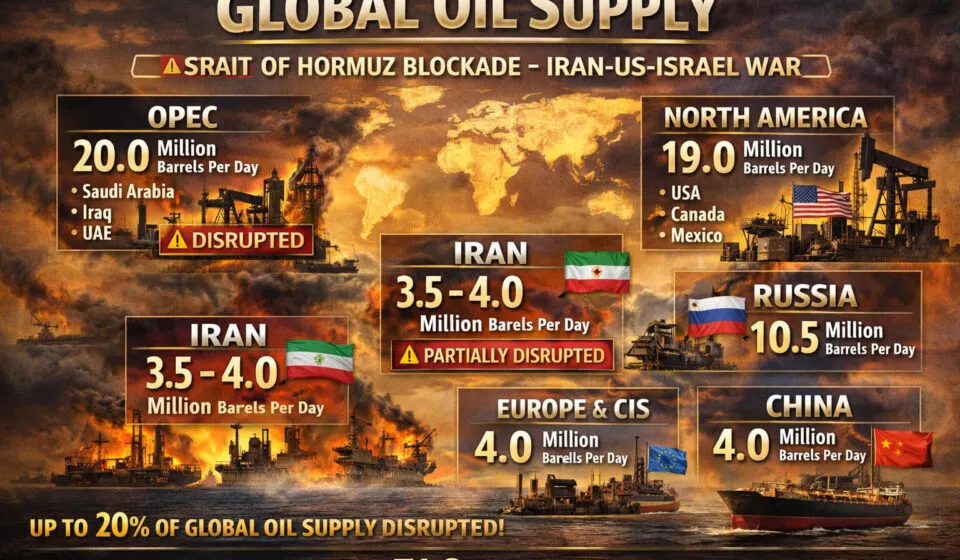
Iran War Energy Shock Disrupts Global Oil Supply
Iran War Energy Shock disrupts global oil supply as IEA warns of prolonged outages, tightening markets and raising pressure across energy systems.
- Around 18 million barrels daily remain offline, tightening supply and limiting short-term recovery options.
- IEA warns Gulf energy flows may take over six months to normalize under current conditions.
- Nord Stream outages deepen supply strain, reducing flexibility across global energy markets.
Iran War Energy Shock intensifies global market strain as supply disruptions deepen across oil and gas systems. The warning signals extended outages, tightening liquidity, and raising pressure across interconnected financial and commodity markets worldwide.
Prolonged Supply Disruptions Pressure Energy Markets
The International Energy Agency issued a warning through widely circulated market commentary this week. The statement gained traction after amplification by The Kobeissi Letter on social media. The message framed the Iran conflict as a major risk to global energy stability.
The agency stated that restoring Gulf energy flows may take six months or longer. That timeline extends beyond typical disruption cycles seen in prior regional conflicts. As a result, traders are adjusting expectations toward sustained supply tightness.
Energy markets usually absorb short disruptions using reserves and logistical rerouting. However, extended outages reduce buffer capacity and strain supply chains. This situation increases volatility across crude oil and refined product markets.
Futures pricing has started reflecting longer-term uncertainty across energy contracts. Market participants now anticipate tighter balances extending into future quarters. Consequently, risk premiums continue rising across global commodity benchmarks.
Supply Deficit Deepens Amid Limited Replacement Capacity
Roughly 18 million barrels per day of crude supply remain offline under current conditions. This figure represents a substantial portion of global daily oil consumption. As a result, the market faces a measurable supply deficit rather than temporary dislocation.
Replacement options remain limited across major producing regions worldwide. While some producers may increase output, spare capacity remains constrained. This restricts the ability to stabilize supply levels quickly.
The IEA noted that there is no immediate substitute for Gulf oil volumes. That assessment reflects years of constrained upstream investment globally. Therefore, supply recovery depends heavily on resolving disruptions within the affected region.
Strategic reserves may provide short-term relief under emergency conditions. However, they cannot sustain long-term supply replacement at this scale. This creates continued pressure on both spot prices and forward market expectations.
Structural Strain Intensifies With Nord Stream Offline
The continued shutdown of the Nord Stream pipelines adds further strain to global energy systems. These pipelines once served as a key supply route into European markets. Their absence reduces flexibility in global energy distribution.
European markets remain dependent on imported energy under constrained supply conditions. As alternative sources tighten, competition for available supply intensifies. This drives price sensitivity across both oil and gas markets.
The lack of redundancy across major supply routes increases systemic fragility. Even minor disruptions now carry amplified market reactions. This environment sustains elevated volatility across global energy pricing.
Financial markets continue adjusting to these evolving supply dynamics. Energy-linked assets show increased sensitivity to geopolitical developments. Meanwhile, alternative assets such as Bitcoin attract attention during periods of macro uncertainty.