


Nasdaq Rally Mirrors Dot-Com Era AI Boom
Nasdaq continued climbing as AI-driven momentum revived comparisons with the late-1990s dot-com expansion cycle.
- Nasdaq maintained strong upward momentum despite repeated warnings surrounding elevated AI-related technology valuations.
- Analysts compared the current Nasdaq structure with the 1995 to 2000 dot-com market expansion cycle.
- Nasdaq advanced toward 30,000 as traders monitored similarities with historic speculative technology rallies closely.
Nasdaq continued attracting attention after fresh comparisons emerged between the current AI rally and the late-1990s technology expansion. Traders monitored whether momentum conditions resembled the final acceleration phase before the dot-com collapse.
Nasdaq Rally Draws Dot-Com Comparisons
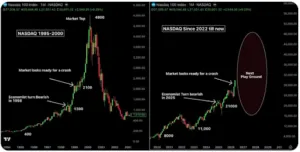
Nasdaq market structure recently sparked comparisons with the historic 1995–2000 technology rally period. A chart shared by Bull Theory focused on recurring market psychology patterns. The analysis compared investor sentiment across both technology-driven expansion cycles.
Source: X
The historical chart showed Nasdaq beginning near 400 during the mid-1990s expansion phase. Economists later turned bearish as the index approached the 1,300 region during 1998. Concerns around excessive valuations steadily increased throughout the broader technology rally afterward.
Bearish sentiment intensified further once Nasdaq crossed above the 2,100 level during 1999. Many analysts warned the market had become dangerously disconnected from underlying fundamentals. However, the index later surged toward approximately 4,800 before eventually collapsing afterward.
The comparison chart showed similar behavioral patterns emerging during the current AI-driven expansion cycle. Nasdaq bottomed near 8,000 during the broader 2022 market correction phase. Momentum later strengthened as artificial intelligence-related optimism accelerated across technology sectors.
AI Momentum Continues Driving Nasdaq Expansion
Bull Theory noted that bearish commentary increased again near the 11,000 region during 2025. Economists described the artificial intelligence rally as another speculative market bubble developing rapidly. Concerns mainly focused on stretched valuations across major technology companies and infrastructure providers.
The same skepticism returned once Nasdaq advanced toward the 21,000 level shown on the chart. Wall Street commentary increasingly described the market as heavily overextended and vulnerable. Despite those concerns, Nasdaq continued climbing toward the 30,000 region afterward.
The chart emphasized structural similarities between both historical technology-driven market expansion cycles. Each rally experienced prolonged consolidation before entering a strong acceleration phase afterward. Bearish market calls repeatedly emerged during every major upward movement across both periods.
The analysis also focused heavily on investor psychology throughout prolonged momentum-driven market cycles. During the dot-com era, internet stocks dominated speculative capital allocation across equities markets. Artificial intelligence now occupies a similar leadership position within technology-related investment activity.
Traders Monitor Late-Cycle Momentum Risks
Bull Theory argued that the strongest gains during 1999 appeared after repeated bearish top predictions. Nasdaq nearly doubled from 2,100 toward 4,800 within roughly eighteen months afterward. That acceleration created massive gains before the eventual market collapse unfolded later.
The analyst suggested the present cycle could still enter another aggressive upward expansion phase. Based on the historical comparison, Nasdaq could theoretically approach the 40,000–50,000 range eventually. The chart did not identify where a potential market peak could finally emerge.
Historical comparisons also revived concerns surrounding late-cycle speculative momentum conditions across technology sectors. The original dot-com cycle later ended with an approximately 80% Nasdaq market decline. That collapse erased substantial gains accumulated during the earlier acceleration phase.
Current Nasdaq momentum still appears concentrated within artificial intelligence and large-cap technology leadership. Liquidity conditions and earnings growth continue supporting broader bullish market positioning currently. Traders now remain focused on whether momentum eventually weakens after the ongoing acceleration phase.