

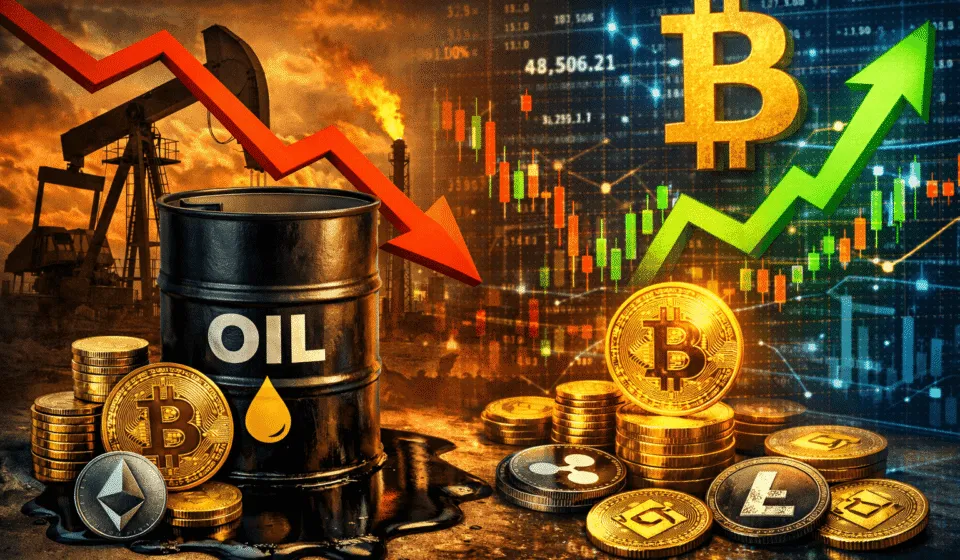
Oil Price Impact on Crypto Markets and Bitcoin Demand
Oil prices and crypto markets show growing correlation as energy costs, inflation trends, and global liquidity influence digital asset trading behavior.
- Oil price volatility can shift global liquidity conditions, indirectly influencing capital flows into crypto assets.
- Rising oil costs often increase inflation pressure, which can strengthen demand for alternative assets like Bitcoin.
- Energy prices also affect mining economics, directly influencing crypto network profitability and supply dynamics.
Oil price impact on crypto markets has become more visible as global liquidity conditions shift. Energy markets influence inflation trends and capital allocation. These forces can shape investor behavior across digital assets.
Energy Markets Often Move Before Risk Assets
Oil prices frequently signal broader economic conditions. Rising crude prices usually indicate stronger demand across global industries. Lower prices may reflect slowing growth or declining consumption.
Financial markets often react quickly to these signals. Traders monitor crude benchmarks such as Brent and WTI for macro direction. As energy markets move, capital allocation across risk assets can shift.
Cryptocurrencies increasingly respond to these macro changes. Bitcoin and other digital assets trade within the broader risk environment. Energy price shifts can therefore influence sentiment toward crypto exposure.
The offshore crude buildup near China shows supply pressures forming. Large floating inventories may signal potential future supply releases. Such expectations can moderate oil price momentum across commodity markets.
Inflation Pressure Can Shift Capital Toward Crypto
Higher oil prices frequently push inflation higher. Energy costs influence transportation, manufacturing, and consumer goods pricing. Inflation expectations often rise when crude supply tightens.
Investors sometimes move capital toward alternative assets during inflation periods. Digital assets such as Bitcoin attract attention as inflation hedges. Market narratives linking crypto to monetary protection become stronger.
The floating crude inventory near China could influence price expectations. If supply eventually enters the market, price pressure could soften. Lower energy costs may ease inflation concerns globally.
Inflation moderation often affects crypto demand cycles. Reduced inflation pressure can shift focus back toward interest rate expectations. That transition sometimes changes digital asset trading momentum.
Energy Costs Also Shape Crypto Mining Economics
Oil and natural gas prices influence electricity markets globally. Mining operations depend heavily on electricity costs for profitability. Rising energy costs can increase operational expenses for miners.
Mining profitability often fluctuates with energy price movements. When power becomes expensive, smaller miners may reduce activity. Network hash rate growth can therefore slow during energy price spikes.
Conversely, lower energy prices may improve mining economics. Cheaper electricity allows more machines to operate profitably. Increased network participation can stabilize mining supply dynamics.
The offshore oil stockpile near China signals potential supply flexibility. If additional crude reaches global markets, energy prices could stabilize. Mining operations would benefit from more predictable power costs.
Energy markets and crypto assets operate within the same macro financial environment. Oil supply developments can shape inflation trends, liquidity conditions, and mining costs. These forces connect commodity markets with digital asset performance.