

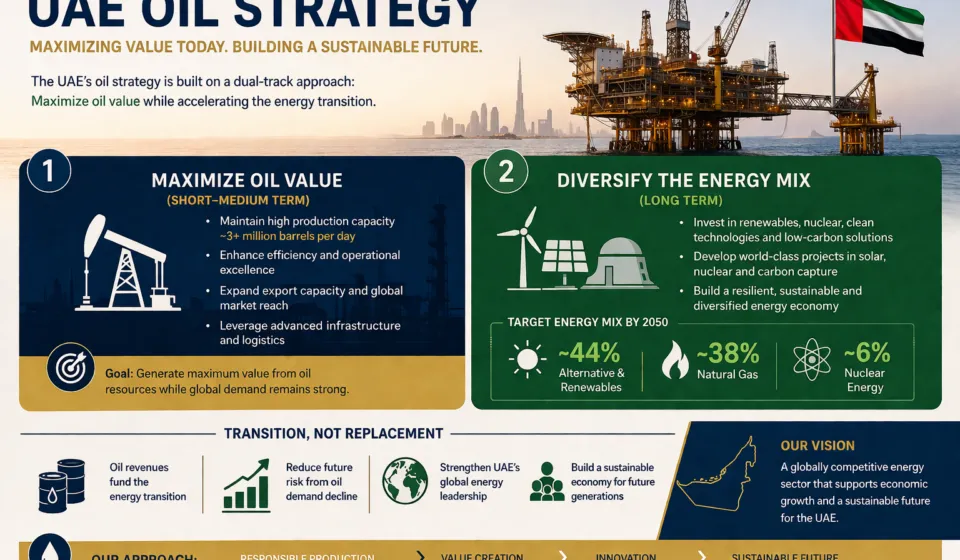
UAE Oil Strategy Reshapes Global Supply Routes
UAE oil strategy gains attention as pipeline routes and currency shifts raise questions about supply control and global oil pricing dynamics.
- UAE oil strategy centers on bypassing Hormuz, offering export flexibility amid geopolitical risks and supply route concentration concerns.
- Claims of OPEC exit remain unconfirmed, though market attention focuses on potential shifts in production coordination.
- Yuan-based oil trade discussions reflect gradual diversification rather than a sudden shift from dollar dominance.
UAE oil strategy is drawing market focus as discussions emerge around supply routes, production flexibility, and currency diversification. Recent commentary and data point to evolving dynamics within global oil markets and trade frameworks.
Strategic Pipeline Network Reduces Hormuz Dependence
The map referenced by End Wokeness outlines a key logistical route. It shows how the United Arab Emirates bypasses the Strait of Hormuz. This route connects inland production to external markets.
The pipeline extends from Habshan to Fujairah on the eastern coast. It allows crude exports directly into the Gulf of Oman. This reduces reliance on a major maritime chokepoint.
The Strait of Hormuz remains one of the most sensitive energy corridors globally. A large portion of global oil flows through this narrow passage. Any disruption there can affect supply stability and pricing.
By establishing an alternative route, the UAE gains operational flexibility. Export continuity becomes less exposed to regional tensions. This infrastructure supports consistent supply under varying geopolitical conditions.
OPEC Dynamics and Production Control Debate
The commentary suggests a potential shift involving OPEC membership. Claims about the UAE exiting the group remain unverified. Current data confirms continued participation within the organization.
OPEC has historically coordinated output among member states. This coordination influences global supply levels and price stability. The UAE remains a significant contributor within that framework.
The argument points to the UAE’s production capacity. It references the possibility of increasing output beyond coordinated limits. Such a move would depend on market demand and internal policy decisions.
While the UAE holds a notable position, OPEC includes several major producers. Saudi Arabia and Iraq continue to shape overall output decisions. Any structural shift would require broader alignment among members.
Currency Shift Claims and Market Reality
A separate claim from DeFiTracer references yuan-based oil transactions. It suggests a move away from U.S. dollar pricing. However, such transitions typically occur gradually across markets.
The global oil trade remains largely denominated in dollars. This system is supported by liquidity and established financial infrastructure. Shifting away requires sustained coordination and adoption.
China has promoted yuan-denominated contracts in energy markets. Some bilateral agreements have explored alternative settlement methods. These developments reflect diversification rather than immediate transformation.
Reports about large-scale financial shifts remain speculative without official confirmation. Market participants continue monitoring policy signals and trade flows. Currency diversification trends are evolving within a broader global context.