

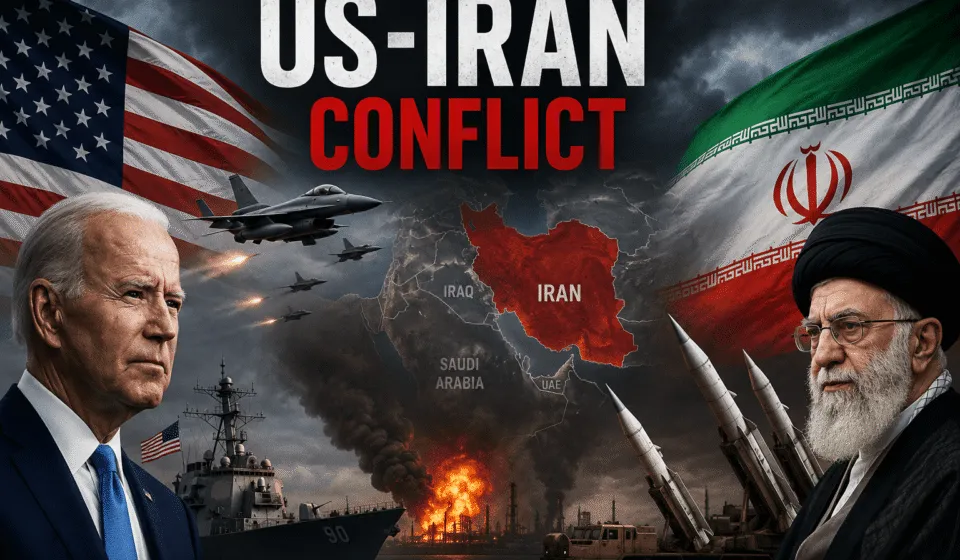
US-Iran Conflict Escalates After Hormuz Strikes
US-Iran conflict intensifies after reported strikes following Hormuz vessel attacks, keeping energy and financial markets on high alert.
- US-Iran conflict intensified after reported military strikes following attacks on three commercial vessels in the Strait of Hormuz.
- Energy markets closely monitor Hormuz security as renewed military action raises concerns over shipping and oil supply stability.
- Bitcoin and broader crypto markets may experience higher volatility as investors react to rising geopolitical uncertainty.
US-Iran Conflict entered a new phase after reported American military strikes followed attacks on commercial vessels, drawing renewed attention to energy markets, shipping security, and broader financial sentiment.
Military Response Follows Strait of Hormuz Attacks
Crypto Banter reported that U.S. military forces launched strikes against Iran. The post cited U.S. Central Command as the primary source. CENTCOM said the operation targeted Iranian assets after attacks on commercial shipping.
According to the statement, three commercial vessels were attacked while transiting the Strait of Hormuz. U.S. officials described those incidents as dangerous and unacceptable. They also called the reported attacks violations of an existing ceasefire.
The reported operation marked another escalation between Washington and Tehran. Officials stated the strikes intended to impose heavy costs on Iran. Initial reports indicated military activity near southern Iranian coastal areas.
The accompanying image shows a U.S. flag beside heavy smoke above damaged buildings. However, the image alone cannot independently verify where or when it was captured. Confirmation depends on official statements and verified reporting.
Hormuz Tensions Renew Focus on Global Energy
The Strait of Hormuz remains one of the world’s most critical maritime corridors. A substantial share of global oil exports passes through this route. Any disruption immediately attracts attention across international energy markets.
Oil prices frequently react whenever security conditions deteriorate around the waterway. Shipping companies also reassess operational risks during military confrontations. Insurance costs may increase as uncertainty expands across regional trade routes.
Reports also indicated additional U.S. measures affecting Iranian oil exports. Washington announced the revocation of a license previously permitting certain Iranian oil sales. The decision followed the reported attacks on commercial vessels.
Regional governments have also responded to the developing situation. Maritime security remains a central concern for energy producers and shipping operators. Markets continue monitoring whether commercial navigation remains uninterrupted.
Crypto Markets Watch Broader Macro Developments
Geopolitical events often influence cryptocurrency trading through changing investor sentiment. Risk-sensitive assets can experience increased volatility during military confrontations. Bitcoin frequently moves alongside broader financial markets during initial uncertainty.
As developments continue, traders typically monitor traditional safe-haven assets closely. Gold and the U.S. dollar often attract defensive capital during geopolitical stress. Digital assets may initially experience wider price swings as liquidity conditions tighten.
Ethereum and many alternative cryptocurrencies generally display greater volatility than Bitcoin. Risk appetite often weakens when geopolitical uncertainty intensifies across global markets. Consequently, altcoins sometimes experience larger percentage movements during such periods.
The reported military operation remains a developing story. Market participants will likely watch for further official updates, Iran’s response, and shipping conditions across the Strait of Hormuz. Those developments could continue shaping sentiment across commodities, equities, foreign exchange, and cryptocurrency markets in the coming sessions.