

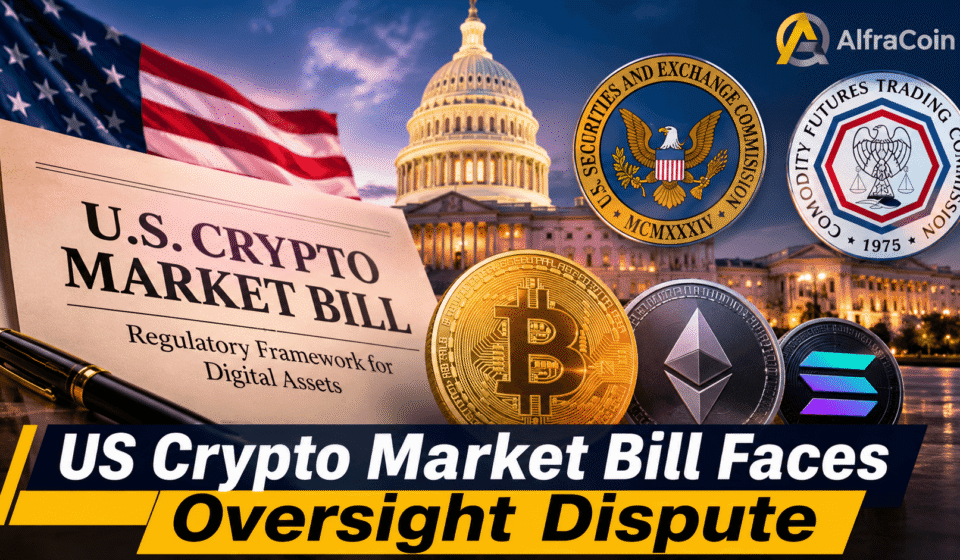
US Crypto Market Bill Faces Oversight Dispute
US crypto market bill discussions widen as Democrats consider SEC authority, CFTC limits, and new ethics rules for federal officials.
- House Democrats are discussing broader crypto legislation for the next Congress, building on Maxine Waters’ 2025 consumer protection proposal.
- The proposal could expand SEC oversight while narrowing the CFTC’s role, renewing disputes over federal authority across digital asset markets.
- Potential ethics restrictions involving Trump and other federal officials could complicate negotiations, while Republicans have dismissed the proposal as messaging.
US crypto market bill discussions are expanding as House Democrats consider broader oversight rules, renewed ethics limits, and a revised balance between federal regulators ahead of the next Congress.
Democrats Consider Broader Crypto Legislation
Coin Bureau reported that House Democrats are discussing a broader crypto market structure bill for the next Congress. Eleanor Terrett reported the discussions, which build on Maxine Waters’ 2025 Crypto Investor and Consumer Bill of Rights. The proposal could extend beyond consumer protections into federal oversight and ethics requirements.
The reported framework would give the Securities and Exchange Commission greater authority over digital asset markets. At the same time, lawmakers are considering limits on the Commodity Futures Trading Commission’s role. The final division of responsibilities remains subject to further legislative discussions.
The two agencies currently oversee different areas of financial markets. The SEC regulates securities, disclosures, and related investor protection requirements. Meanwhile, the CFTC supervises derivatives and certain commodity market activities.
Their overlapping responsibilities have created uncertainty for crypto businesses. Token classification can determine which regulatory requirements apply to particular activities. A revised framework could change those boundaries across the industry.
SEC Authority and CFTC Limits Remain Contentious
A larger SEC role could place more digital asset activities under securities oversight. That could affect exchanges, token issuers, brokers, and other service providers. Businesses may need to review their registration and compliance obligations.
However, limiting the CFTC would raise separate questions about commodity markets. Crypto companies have sought clearer boundaries between the agencies for years. Any legislative change would need precise definitions of covered assets and activities.
The discussions follow the stalled effort to advance the CLARITY Act. The legislation failed to progress through the Senate in September. Its setback left lawmakers without an agreed federal market structure framework.
Congressional leadership could also shape the proposal’s prospects. Committee control influences which bills receive hearings and legislative attention. The next Congress could therefore bring a different approach to crypto oversight.
Ethics Provisions Could Complicate Negotiations
The reported discussions also include potential restrictions on federal officials’ crypto activities. Those provisions could address President Donald Trump and other government figures. Their inclusion would connect financial regulation with public office ethics.
The issue could become a difficult point during negotiations. Democrats may seek restrictions covering officials’ financial interests and crypto dealings. Republicans could challenge provisions they consider politically motivated.
The debate concerns whether officials should participate in industries they help regulate. Any restrictions would require clear definitions and enforceable standards. Lawmakers would also need to determine which activities fall within those rules.
Republicans have reportedly described the proposal as a “messaging bill.” That response signals doubts about its legislative purpose and prospects. However, the reported discussions do not establish the bill’s final direction.
For crypto businesses, the eventual wording will matter more than political statements. A clear framework could define agency responsibilities and compliance requirements. Yet broader oversight could also introduce additional obligations for market participants.
The proposal remains under discussion, rather than enacted federal law. It would still require drafting, committee review, congressional votes, and approval. Until those steps occur, existing regulatory arrangements remain in place.