

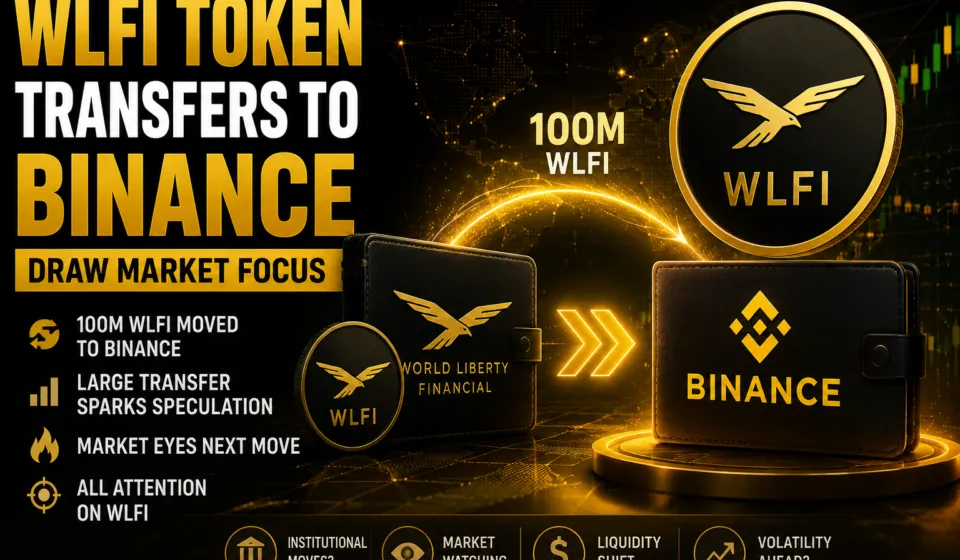
WLFI Token Transfers to Binance Draw Market Focus
WLFI Token transfers totaling 100 million reached Binance as treasury activity sparked attention across on-chain markets and trading desks.
- WLFI treasury transferred 100 million tokens worth about $5.30 million to Binance through two separate blockchain transactions.
- One transfer reached Binance directly, while another passed through a fresh wallet before the final exchange deposit.
- Exchange deposits alone cannot confirm token sales, leaving traders watching subsequent on-chain wallet activity closely.
WLFI Token activity attracted market attention after treasury wallets completed major blockchain transfers, while traders monitored exchange inflows before assessing possible market developments surrounding the latest on-chain movements.
Treasury Transfers Reach Binance
On-chain monitoring platforms recorded two notable transfers involving World Liberty Financial treasury wallets. Combined movements totaled 100 million WLFI during the observed period. Estimated value reached approximately $5.30 million.
A recent social media update documented the blockchain activity using Arkham tracking data. The report stated one treasury wallet transferred 50 million WLFI directly to Binance. That transaction carried an estimated value near $2.65 million.
Another transfer followed a different route before reaching the same destination. Treasury funds moved into a newly created wallet initially. That address later forwarded 50 million WLFI to Binance.
Together, both transfers completed identical token movements into the exchange. Blockchain records confirmed the combined amount reached 100 million WLFI. The destination remained identifiable through labeled exchange deposit addresses.
Transfer Routes Show Different Execution
The transaction sequence revealed two separate operational methods during the same trading day. One transfer arrived directly at Binance without intermediary movement. The second transaction briefly paused within a fresh wallet.
Blockchain analysts frequently monitor routing patterns between treasury wallets and exchanges. Different transaction paths sometimes reflect internal treasury management procedures. Public blockchain records alone cannot determine operational intent.
The treasury originated both transfers from the same labeled wallet entity. However, execution methods differed despite matching transfer amounts. That distinction attracted attention among blockchain monitoring platforms.
On-chain transparency allowed observers to verify every recorded movement independently. Wallet labels simplified tracking across multiple addresses. Market participants therefore followed the transfers without relying on unofficial interpretations.
Exchange Deposits Leave Questions Open
Exchange deposits often receive immediate attention across cryptocurrency markets. Even so, deposits alone cannot verify an imminent token sale. Blockchain transfers reveal movement rather than final execution.
Treasury wallets may send assets for several operational reasons beyond open-market selling. Liquidity management remains one possible explanation. Custody adjustments and market-making activity also remain potential scenarios.
Current blockchain records only confirm that 100 million WLFI reached Binance. They do not identify subsequent trading activity involving those tokens. Additional wallet movements would provide greater transactional clarity.
The reported transfers therefore represent confirmed blockchain events instead of confirmed market actions. Traders continue watching exchange balances and treasury wallets closely. Future on-chain activity may provide additional context surrounding these transfers.