


US Treasury Refinancing Wall Raises Market Timing Questions for Crypto Investors
US Treasury refinancing wall fuels debate on rates, deficits, and crypto positioning as maturities surge toward 2026.
- Nearly $9.6 trillion in Treasurys mature in 2026, forcing large-scale refinancing at higher interest rates.
- Rising federal interest costs could exceed $1 trillion annually, tightening fiscal flexibility.
- Market participants expect potential rate cuts to restore liquidity and lift risk-on assets.
US Treasury refinancing wall concerns are resurfacing as investors examine a dense maturity schedule approaching 2026. Analysts are weighing refinancing costs against policy responses while markets evaluate broader liquidity expectations.
Treasury Maturity Concentration Draws Market Attention
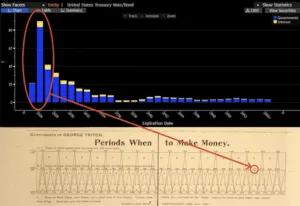
The chart shared in recent market discussions shows a sharp rise in Treasury maturities around 2026. Blue bars represent principal rollovers, while interest obligations appear layered above them. This visual framing has circulated widely on social platforms.
Source: X
A widely shared tweet from DANNY described the schedule as a looming refinancing storm. The post emphasized that nearly a quarter of outstanding debt matures within a single calendar year. The framing attracted attention across crypto and macro-focused investor circles.
Market participants note that such clustering reflects issuance patterns from the 2020 to 2021 period. Emergency fiscal programs relied heavily on short-dated securities during near-zero rate conditions. Those decisions now intersect with a higher yield environment.
Despite the size of the maturities, demand for Treasury has remained resilient historically. During previous stress periods, Treasury auctions cleared without disruption. Investors continue to view U.S. debt as highly liquid collateral.
Interest Costs Rise as Policy Constraints Tighten
Refinancing low-coupon debt into higher-yielding instruments increases federal interest expenses over time. Budget data already show net interest as one of the fastest-growing outlays. This trend has fueled debate around fiscal sustainability.
The DANNY tweet argues that refinancing costs, not repayment risk, drive the concern. According to the post, rising rates compress fiscal flexibility. The narrative suggests political pressure builds as expenses climb.
However, Treasury refinancing occurs gradually rather than all at once. Maturities are distributed across months, limiting sudden cash demands. The debt profile resembles a ladder instead of a single cliff.
Federal Reserve policy remains guided by inflation and employment data. Rate decisions historically respond to economic conditions rather than Treasury funding needs. Market pricing reflects this separation between fiscal and monetary mandates.
Crypto Markets Watch Liquidity Signals Closely
Crypto investors often focus on liquidity cycles when assessing risk appetite. Lower rates can support leverage and speculative positioning. Yet the timing of such shifts remains uncertain.
Bitcoin traded near $64,000 during recent discussions around the maturity schedule. Price action reflected broader macro sentiment rather than debt statistics alone. Liquidity expectations continue to guide positioning.
The tweet narrative suggests markets may anticipate future rate cuts well before official action. History shows risk assets often move ahead of policy pivots. That pattern draws attention from high-beta market participants.
Still, rate cuts linked to economic slowdown can pressure assets initially. Liquidity alone does not determine price direction. Growth expectations and credit conditions shape market responses.
Political and Market Timelines Remain Distinct
The conversation references a potential leadership transition at the Federal Reserve in 2026. Political commentary around interest rates has already entered public discourse. Markets monitor these signals without assuming direct control.
Fiscal debates around deficits and interest costs are likely to intensify. Budget negotiations often reflect competing priorities rather than market stability goals. Investors differentiate rhetoric from actionable policy shifts.
Crypto markets operate within this broader macro framework. Traders assess probability distributions instead of fixed outcomes. Volatility often emerges during periods of narrative convergence.
The refinancing schedule adds context rather than certainty. Markets continue to price data, policy, and sentiment together. The focus remains on timing rather than inevitability.