


Ethereum Open Interest Falls as Price Tests Support
Ethereum open interest falls as ETH tests support near $2,200, while declining derivatives exposure and bearish momentum shape market direction.
- Ethereum open interest on Binance fell $1.3 billion in a month, reaching $5.7 billion as traders reduced derivatives exposure.
- ETH has lost around $54 billion in market capitalization over three weeks, with its price declining approximately 15%.
- Ethereum trades inside a descending channel, with support near $2,200 and resistance around $2,450 guiding the next move.
Ethereum open interest continues shrinking as ETH prices decline, with derivatives data and technical indicators pointing to continued market pressure.
Ethereum Derivatives Exposure Contracts
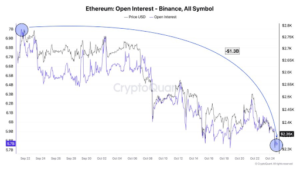
Ethereum has experienced a sharp reduction in derivatives positioning alongside its recent price correction. In a post, Darkfost reported that Binance open interest dropped nearly 20% over one month. The decline brought outstanding positions on the exchange down to approximately $5.7 billion.
Source: X
The supplied chart shows open interest falling from around $7 billion in late September. By October 25, the indicator had approached its lowest displayed level. ETH’s price also declined, moving from approximately $2,700 toward $2,350.
Darkfost estimates that Ethereum lost around $54 billion in market capitalization over three weeks. The decline accompanied an approximately 15% price correction during that period. Together, these figures show weakening prices and reduced exposure across derivatives markets.
The contraction extends beyond Binance, according to the reported exchange figures. Gate recorded a monthly decline of $995 million, while HTX lost $857 million. Bybit’s open interest decreased by another $310 million over the same period.
Exchange Data Shows Broader Deleveraging
Across all exchanges, Ethereum open interest reportedly fell to approximately $11.5 billion. Binance still accounts for around 50% of total exposure, making it the largest venue. Bybit holds approximately 17.5%, while Gate and OKX each represent around 14.7%.
Falling open interest can reflect several market developments. Liquidations may close leveraged positions when prices move against traders, while uncertainty can encourage voluntary exits. However, the available figures do not separate forced liquidations from deliberate position reductions.
The simultaneous decline in price and open interest is consistent with deleveraging. Traders appear to be reducing exposure rather than maintaining previous positioning levels. Still, the data alone cannot establish whether selling pressure has reached its final stage.
Darkfost also points to an earlier episode in July, when open interest fell more sharply. Ethereum subsequently stabilized and recorded a rebound exceeding 32%. That recovery carried ETH above $2,800 for the first time since January, according to the supplied account.
ETH Chart Keeps Downside Levels in Focus
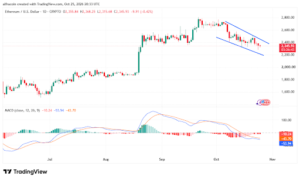
Ethereum traded near $2,347 in the supplied daily chart dated October 25. Price action shows a decline from the late-September peak near $2,780. Since then, ETH has formed lower highs and lower lows within a descending channel.
Source: Tradingview
The channel’s lower boundary points toward the 2,200–2,250 regions. This area could attract buyers if the decline continues. A decisive break below it would weaken the current structure and expose Ethereum to further losses.
On the upside, resistance sits around 2,400–2,450. A sustained move above this range could indicate that selling pressure is easing. However, a stronger recovery would require ETH to break above the descending trendline.
The MACD remains bearish, with its line near -53.78 and signal line around -43.67. The histogram stands near -10.11, showing that downside momentum remains present. Although the histogram has narrowed from earlier negative readings, this change does not confirm a reversal.
Ethereum’s next direction depends on whether buyers defend support or sellers extend the decline. The July recovery offers historical context, but does not guarantee a similar outcome. For now, falling open interest and the descending price structure indicate that market pressure remains unresolved.