

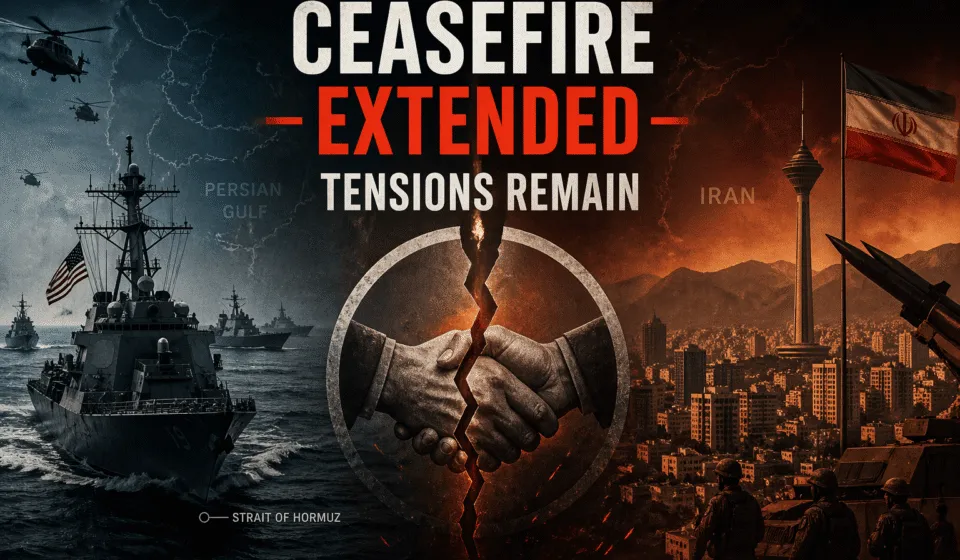
Iran Ceasefire Extension Sets Conditional Deadline
Iran ceasefire extension comes with strict conditions as the US maintains blockade and demands a unified proposal under a defined negotiation timeline.
- Iran ceasefire extension ties diplomatic progress to a unified proposal under strict conditions and timelines.
- Continued blockade signals sustained pressure despite pause in direct military escalation.
- Regional intervention reflects broader concerns over escalation and geopolitical stability.
Iran ceasefire extension reflects a calculated pause shaped by strategic pressure and conditional diplomacy. The framework signals ongoing tension, with negotiations constrained by timelines and reinforced by continued military readiness and regional involvement.
Conditional Framework Shapes Negotiation Timeline
The Iran ceasefire extension introduces a structured diplomatic window rather than an open pause. Conditions tied to a unified proposal define the path forward. This requirement places clear responsibility on Tehran’s leadership.
A widely circulated update outlined the conditional tone of the announcement. It emphasized that talks must conclude “one way or the other.” This language signals a firm endpoint for ongoing discussions.
The reference to internal fragmentation within Iran adds further context. It frames the delay as a response to internal political conditions. This positioning suggests that cohesion is required before negotiations advance.
By setting a defined outcome requirement, the ceasefire becomes time-bound. It reduces the scope for prolonged dialogue without resolution. This structure aligns with a deadline-driven negotiation approach.
Regional Influence and Strategic Coordination
The involvement of Pakistan introduces an additional geopolitical layer. Requests from Field Marshal Asim Munir and Prime Minister Shehbaz Sharif influenced the decision. Their engagement reflects regional concern over escalation risks.
This coordination highlights how neighboring states seek to manage potential fallout. Stability across surrounding regions remains a priority. Diplomatic outreach at senior levels underscores the urgency of the situation.
The decision also reflects responsiveness to external diplomatic pressure. While the ceasefire extends, it does so within defined limits. This balance maintains engagement while preserving strategic objectives.
Regional participation often shapes outcomes in complex geopolitical environments. It introduces additional negotiation dynamics. These factors contribute to a broader, multi-layered process.
Sustained Pressure Through Military Posture
Despite the Iran ceasefire extension, military posture remains unchanged in key areas. The directive to maintain a blockade continues to apply pressure. This ensures that leverage is not reduced during negotiations.
Statements attributed to Donald Trump reinforce this stance. The military remains “ready and able” during the pause. This readiness preserves the option for rapid escalation if required.
A blockade limits economic and logistical movement, reinforcing strategic constraints. It operates as a continuous pressure mechanism. This approach aligns with maintaining influence without immediate confrontation.
The overall structure combines diplomatic engagement with sustained enforcement measures. Negotiations proceed within a controlled environment shaped by these conditions. The outcome now depends on whether a unified proposal emerges within the defined timeframe.