
Stellar Roadmap Targets Global Finance Integration
Stellar and PwC outline a blockchain roadmap focused on financial inclusion, lower costs, stronger governance, and wider institutional adoption.
- Stellar and PwC identify financial inclusion, institutional cooperation, stronger governance, and education as priorities for blockchain adoption.
- Collaboration between banks, blockchain companies, and governments could improve payment access, transparency, and the affordability of financial services.
- Wider blockchain adoption could strengthen Stellar’s utility, but the supplied report provides no token prices or technical trading signals.
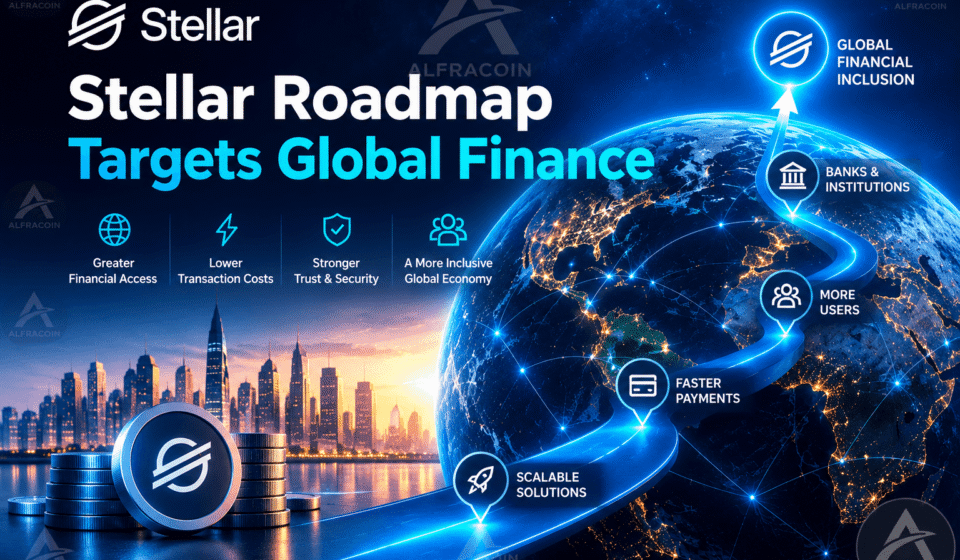
Stellar features in a financial integration roadmap outlining how blockchain technology could improve access, reduce costs, and strengthen trust across global financial services.
Financial Inclusion Drives the Blockchain Roadmap
PwC and Stellar have outlined priorities for integrating blockchain technology into the global financial system. The roadmap emphasizes financial inclusion, institutional collaboration, regulatory safeguards, and education. These priorities focus on practical applications rather than cryptocurrency trading alone.
ALLINCRYPTO described the report as a development for the wider cryptocurrency industry. Its central argument concerns blockchain’s potential role within established financial services. However, broader adoption depends on implementation rather than the publication of recommendations alone.

Source: X
The document identifies digital payments as an entry point to essential financial services. Accessible payment systems could help underserved communities participate more effectively in the financial system. Providers are encouraged to identify service gaps and develop solutions addressing specific needs.
Nevertheless, access does not automatically produce meaningful financial inclusion. Solutions must remain affordable, practical, and suitable for the people they intend to serve. The roadmap therefore calls for assessing social impact alongside technological development.
Banks and Blockchain Networks Could Work Together
The second priority encourages cooperation between blockchain companies and traditional financial institutions. Established providers already possess customer relationships, operational networks, and physical locations. Blockchain applications could complement these resources through improved speed, affordability, interoperability, and transparency.
Such cooperation could connect blockchain infrastructure with existing financial services. Banks could explore digital solutions while retaining established operational capabilities. Blockchain developers could also reach users through existing institutional distribution channels.
For Stellar, practical payment applications provide a relevant context for this approach. The network’s role in financial services depends on how institutions and developers use its infrastructure. The roadmap does not establish that every proposed application has achieved widespread adoption.
The report also identifies government cooperation as essential to responsible development. Security, privacy, transparency, and corporate governance feature prominently in its recommendations. Effective regulation could support innovation while establishing safeguards for consumers and financial institutions.
Governance and Education Shape Adoption Prospects
The roadmap treats public education as another requirement for wider blockchain adoption. Users, institutions, and governments need clear explanations of how public networks operate. Providers must demonstrate how their solutions address identifiable financial challenges.
Education also requires acknowledging the limitations of blockchain-based services. Clear information can help stakeholders evaluate costs, benefits, and operational risks. This approach supports more informed decisions about adopting new financial technologies.
For Stellar, broader institutional adoption could increase attention on its payment infrastructure. However, the report provides no current XLM price, trading volume, or technical indicators. It therefore cannot establish a price target or confirm a bullish market trend.
The four priorities form a framework for connecting blockchain technology with established financial services. Financial access, institutional cooperation, governance, and education address different barriers to implementation. Their practical results will determine how effectively the roadmap translates into broader adoption.
The development places utility and institutional integration at the center of the discussion. Yet recommendations alone cannot establish future network activity or token demand. XLM’s market outlook requires separate assessment using verified trading data and adoption metrics.