


Bitcoin ETF Outflows Reach $635.6M in One Day
Bitcoin ETF outflows reached $635.6 million on October 22, reversing three days of inflows and pushing monthly flows into negative territory.
- U.S. spot Bitcoin ETFs lost $635.6 million on October 22, marking October’s largest reported daily withdrawal and reversing recent inflows.
- BlackRock’s IBIT and Fidelity’s FBTC recorded combined outflows of $471.6 million, accounting for approximately 74% of daily net withdrawals.
- October’s ETF flows returned to negative territory, with monthly net outflows reaching $175.6 million after Thursday’s sharp reversal.
Bitcoin ETF outflows surged on October 22, as $635.6 million left U.S. spot funds, reversing recent inflows and pushing October’s cumulative balance negative.
Three Days of Inflows Give Way to Heavy Withdrawals
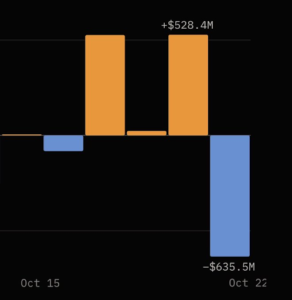
U.S. spot Bitcoin ETFs attracted approximately $1.075 billion between October 19 and October 21. That three-session run showed renewed demand for Bitcoin exposure through regulated investment products. However, Thursday’s withdrawals sharply reduced those gains within a single trading day.
Source: X(BitcoinNewsCom)
The $635.6 million withdrawal represented October’s largest reported daily outflow. It erased roughly 59% of the capital entering funds during the previous three sessions. The reversal changed the month’s overall flow position and weakened the recent recovery in ETF demand.
The accompanying chart shows how quickly daily fund movements can change direction. Positive bars represent net inflows, while negative bars indicate money leaving the funds. The final withdrawal bar extends below the baseline, contrasting with the preceding positive movement.
Despite the reversal, daily ETF flows do not provide a complete picture of Bitcoin demand. Investors can change fund allocations without necessarily selling their entire Bitcoin exposure. The supplied figures do not identify the reasons behind Thursday’s withdrawals.
BlackRock and Fidelity Account for Most Outflows
BlackRock’s iShares Bitcoin Trust, known as IBIT, recorded $254.1 million in net outflows. Fidelity’s FBTC followed with withdrawals totaling $217.5 million during Thursday’s session. ARK’s ARKB recorded another $109.4 million leaving its fund.
Together, BlackRock and Fidelity accounted for approximately 74% of daily net withdrawals. Their combined outflows reached $471.6 million, forming most of the reported total. These figures place the largest contributions among the three named funds.
The concentration matters when interpreting aggregate ETF data. Withdrawals from large funds can shape the overall daily result considerably. However, the reported totals alone do not reveal whether investors moved capital elsewhere.
ARKB’s $109.4 million outflow added to the pressure recorded across these products. The supplied information does not provide comparable figures for every other fund. Therefore, the named products explain much, but not all, of Thursday’s net withdrawal.
Bitcoin Price Context and October’s Monthly Balance
Bitcoin traded near $81,546,as of the time of writing according to coinmarketcap. That price provides context following the ETF withdrawals recorded one day earlier. However, the supplied flow figures do not establish that ETF selling caused Bitcoin’s price movements.
October’s cumulative ETF balance now stands at approximately $175.6 million in net outflows. This figure reflects the month’s overall reported flows, rather than Thursday’s session alone. The latest withdrawal pushed the monthly total below zero after earlier inflows had temporarily improved the balance.
The difference between daily and monthly figures remains important when reading the data. A large withdrawal can change the monthly result, but it does not describe every session. Subsequent inflows could narrow the deficit, while further withdrawals could deepen it.
For now, October 22 marks a clear break in the recent flow pattern. BlackRock and Fidelity supplied most of the reported withdrawals, while the earlier three-day inflow streak lost ground. The next reported sessions will show whether demand returns or monthly outflows continue to grow.