
Chainlink Connects Tokenized Lending With DTCC
Chainlink connects tokenized collateral with automated lending as DTCC integration advances blockchain interoperability across financial markets.
- Chainlink technology connects lending applications with tokenized collateral, enabling verification across blockchain networks before loan funds are released.
- DTCC collaboration connects established securities infrastructure with blockchain applications, supporting automated workflows for collateral verification and settlement.
- Wider adoption of cross-chain lending could increase demand for interoperability infrastructure, although LINK price effects remain uncertain without market data.
Chainlink is advancing blockchain interoperability as tokenized lending explores automated collateral verification, cross-chain coordination, and faster financial transactions involving established securities infrastructure.
Cross-Chain Lending Connects Borrowers and Collateral
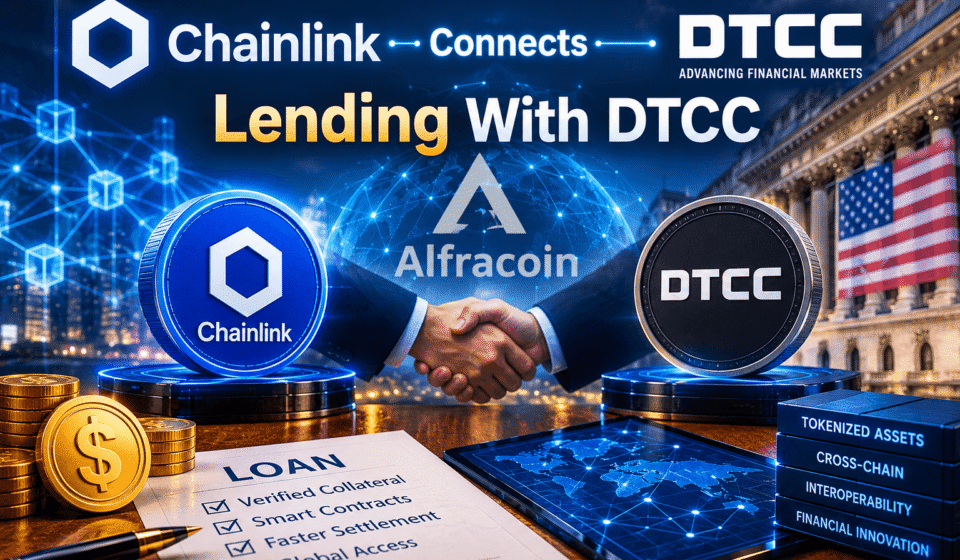
A lending arrangement illustrated in the diagram connects borrowers, lenders, blockchain networks, and collateral verification systems. The process allows shares held on one blockchain to support borrowing elsewhere. This approach addresses coordination challenges when financial applications operate across separate networks.
According to ALLINCRYPTO, Chainlink can connect these systems and verify collateral before releasing funds. The proposed workflow reduces reliance on manual checks and disconnected financial records. Loan execution then follows predefined conditions established by the participating systems.
The process begins when a borrower submits a loan request through the lending application. The lender must verify ownership, asset availability, and eligibility before approving the collateral. These checks help determine whether the proposed security satisfies the lending agreement.
When systems cannot communicate reliably, verification may require additional reconciliation and administrative work. Cross-chain infrastructure can help transmit relevant information between supported networks and applications. However, each implementation must establish appropriate verification procedures and transaction controls.
DTCC Connects Traditional Finance With Blockchain Infrastructure
DTCC provides post-trade services that support securities processing and settlement across financial markets. Its position makes its involvement relevant to institutions exploring blockchain-based financial infrastructure. Connecting these systems could help bridge established securities operations and digital asset applications.
The diagram presents several coordinated stages involving lending applications, collateral checks, and transaction execution. These stages establish a workflow in which verified conditions guide subsequent financial actions. Automated processes can reduce repetitive tasks while improving coordination between participating systems.
Tokenization creates digital representations of financial assets on blockchain networks. However, digital representations alone do not establish ownership rights or guarantee enforceable collateral agreements. Institutions must connect blockchain records with applicable legal, operational, and compliance requirements.
DTCC-related integration efforts therefore involve more than transferring information between different networks. Financial institutions also require dependable records, secure infrastructure, and consistent transaction procedures. These requirements remain essential when collateral supports loans involving substantial financial commitments.
LINK Faces a Broader Infrastructure Adoption Test
The post argues that this type of financial coordination could make Chainlink essential to global finance. The central argument concerns infrastructure connecting institutions, tokenized assets, and applications across different blockchain environments. Wider implementation would depend on institutional adoption and operational requirements.
For LINK, the relevant consideration is whether financial applications generate sustained demand for associated services. Broader use of tokenized securities and cross-chain lending could increase reliance on interoperability infrastructure. However, infrastructure adoption does not automatically establish how much value accrues to the token.
The supplied information does not include LINK’s current market price or recent trading performance. Consequently, it cannot establish a price trend, support level, resistance level, or immediate trading target. A technical assessment would require current market data alongside the infrastructure developments described.
Cybersecurity, regulatory compliance, privacy, and collateral enforcement also remain essential considerations for financial institutions. Smart contracts can execute predefined conditions, but external information and legal arrangements require independent safeguards. These factors will influence whether proposed workflows become practical components of commercial lending.
The development places interoperability at the centre of efforts to connect traditional finance with blockchain systems. DTCC-related infrastructure and cross-chain coordination offer a framework for examining that transition. Future adoption and LINK market performance, however, must be assessed separately using verified implementation and trading data.