
Crypto Regulation Push Targets Digital Commodity Status
Digital commodity status takes center stage as six blockchain organizations urge the SEC to formalize clearer rules for crypto assets.
- Six blockchain organizations urge the SEC to place digital commodity definitions directly into the proposed regulation’s operative text.
- Chainlink, Hedera, Stellar, Aptos, Avalanche, and Cardano seek greater regulatory certainty for their blockchain ecosystems and participants.
- The SEC’s final decision could affect regulatory clarity, but the supplied information provides no current token prices or trading signals.
Digital commodity status is central to a joint regulatory request from six blockchain organizations seeking clearer rules for digital assets in the United States.
Six Blockchain Organizations Press the SEC
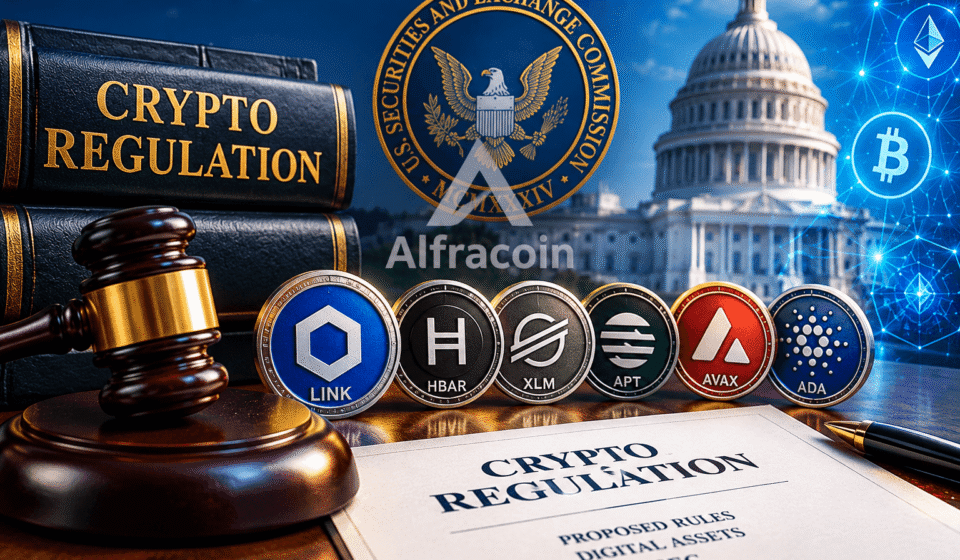
The Stellar Development Foundation, Hedera, Aptos Labs, Ava Labs, Cardano Foundation, and Chainlink Labs submitted the joint letter. Their request concerns the SEC’s proposed Regulation Crypto Assets and its treatment of digital commodities. The organizations want the classification included directly in the regulation’s operative text.
King Solomon, known as Ryan Solomon on X, described the development as a new partnership. His post identified LINK, HBAR, XLM, APT, AVAX, and ADA as associated tokens. However, the document concerns coordinated regulatory advocacy rather than a commercial partnership.
The letter explains the importance of Layer 1 blockchain networks within digital asset ecosystems. These networks support transactions, applications, and participation across decentralized environments. Developers and participants may also contribute to security and governance through protocol-specific mechanisms.
The organizations represent different blockchain technologies but share an interest in regulatory clarity. Their letter addresses how federal rules should classify digital assets within the proposed framework. The request does not establish that the SEC has accepted their position.
The Request Focuses on Formal Regulatory Language
The central issue concerns where the digital commodity definition appears within the proposed regulation. The organizations want it included in operative provisions instead of explanatory language alone. This distinction separates regulatory requirements from the context used to explain them.
A clearly defined framework could help developers assess their compliance responsibilities. It could also assist institutions evaluating blockchain projects and their associated digital assets. However, regulatory treatment still depends on applicable laws and individual circumstances.
The letter discusses how Layer 1 networks support blockchain infrastructure and decentralized participation. Stellar, Hedera, Aptos, Avalanche, and Cardano operate distinct blockchain ecosystems. Chainlink provides oracle infrastructure that connects blockchain applications with external information and systems.
The organizations seek a more formal foundation for digital commodity classification. Their request forms part of the regulatory process surrounding the proposed framework. The SEC must consider submitted comments before determining the final wording.
Token Outlook Depends on Regulatory Developments
The six tokens associated with the organizations are LINK, HBAR, XLM, APT, AVAX, and ADA. Their market performance cannot be determined from the regulatory letter alone. The supplied information contains no current prices, trading volumes, or technical indicators.
If the SEC adopts the requested language, the classification would enter the final rule’s operative text. That could provide market participants with a more formal reference for regulatory assessment. However, the outcome remains uncertain until the Commission issues its final decision.
For token markets, regulatory clarity is only one factor affecting investor decisions. Liquidity, network activity, demand, and broader market conditions also influence prices. No confirmed breakout or price target can be established from the document.
The next milestone is the SEC’s response during the rulemaking process. Until then, the letter represents a request rather than an approved policy. The eventual decision will determine whether the requested clarification enters the final regulation.