

US Debt Strategy Puts Growth and Bond Markets in Focus
US debt strategy centers on economic growth, spending restraint and stable bond markets as energy costs and global risks shape policy.
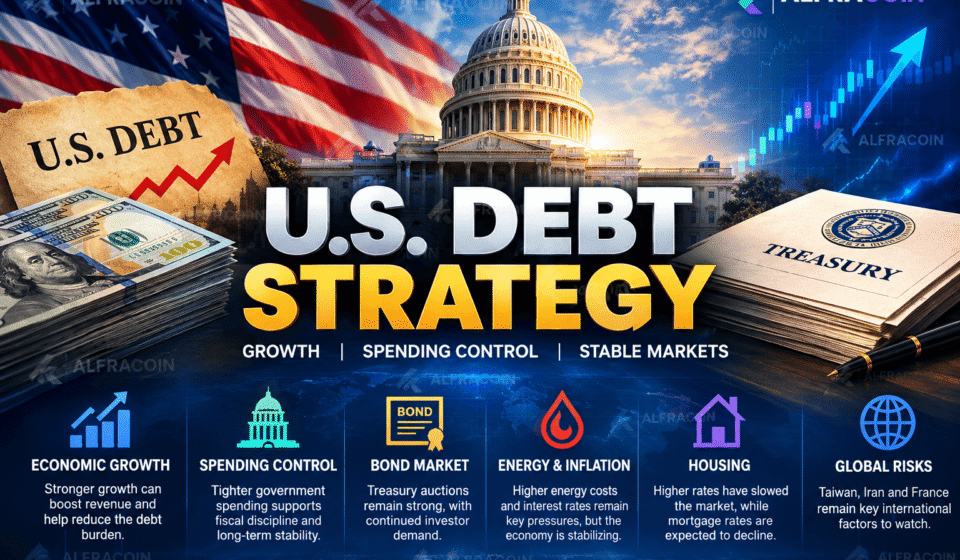
- US debt management depends on stronger economic growth and spending restraint, while Treasury auctions remain firm, according to recent remarks.
- Higher interest rates have slowed housing activity, while expectations for lower mortgage costs depend on inflation and broader market conditions.
- Taiwan’s semiconductor supply, Iran’s currency crisis and French financial stability feature among the international issues raised in the latest remarks.
US debt strategy is drawing attention as Washington weighs economic growth, spending controls and financial stability against persistent borrowing costs and international risks.
Growth and Spending Shape America’s Debt Strategy
Treasury Secretary Scott Bessent argues that America must grow its way out of debt. His approach combines stronger economic activity with tighter control over government expenditure. The aim is to support revenue growth while limiting the need for additional borrowing.
A growing economy can generate higher tax receipts as businesses expand and employment increases. However, rising revenue does not automatically reduce outstanding debt when government spending exceeds income. The fiscal outcome depends on growth, borrowing costs and the size of annual deficits.
Bessent also described Treasury auctions as strong, saying the bond market had performed well. Consistent demand for government securities helps finance federal borrowing requirements. Nevertheless, auction strength alone does not resolve concerns about the country’s long-term debt burden.
Coin Bureau shared these remarks alongside several developments affecting the economic outlook. The message combines confidence in the economy with an emphasis on fiscal discipline. Investors will continue monitoring government borrowing and bond demand as policy priorities develop.
Energy Prices and Housing Remain Under Pressure
Bessent linked higher interest rates to a recent energy shock, while suggesting its effects were easing. Rising energy costs can feed into transportation, manufacturing and household expenses. Persistent inflation can also restrict the scope for lower borrowing costs.
Housing has faced pressure from elevated mortgage rates, which increase monthly payments for prospective buyers. Bessent expects mortgage rates to decline, although the timing remains uncertain. Inflation trends and Treasury yields will remain important factors influencing financing costs.
The secretary also indicated that the government could address ownership of Fannie Mae and Freddie Mac next year. Both institutions occupy central positions in the American mortgage finance system. Any ownership decision could therefore draw attention from housing lenders and financial market participants.
These developments intersect with the broader effort to sustain economic growth. Lower mortgage costs could improve affordability and support housing activity. However, renewed energy inflation could complicate the path toward cheaper credit and stronger consumer demand.
International Risks Add Pressure to the Economic Outlook
Taiwan’s semiconductor industry featured prominently in Bessent’s remarks. He warned that losing access to its chip supply would be devastating for America. A disruption could affect technology production, industrial supply chains and businesses reliant on advanced semiconductors.
Bessent also described Iran’s currency as having collapsed and warned of further economic deterioration. He said panic was setting in as conditions worsened. These statements reflect his assessment, rather than independently verified measurements of Iran’s current economic position.
Regarding France, Bessent said he had seen no financial spillover from its situation. He also praised President Emmanuel Macron’s economic team. His comments indicated that he did not identify an immediate transmission of French financial pressures into American markets.
The wider message remains focused on growth, fiscal restraint and market stability. Strong Treasury auctions provide one measure of continued demand for government debt. However, lasting progress depends on managing deficits while navigating energy costs, housing pressures and international supply risks.